
Edge Computing in Next.js: When It's Actually Worth It
Not every route needs to run at the edge.
A practical look at when edge runtime in Next.js actually helps — and when it's just added complexity dressed up as a trend.
Share this post
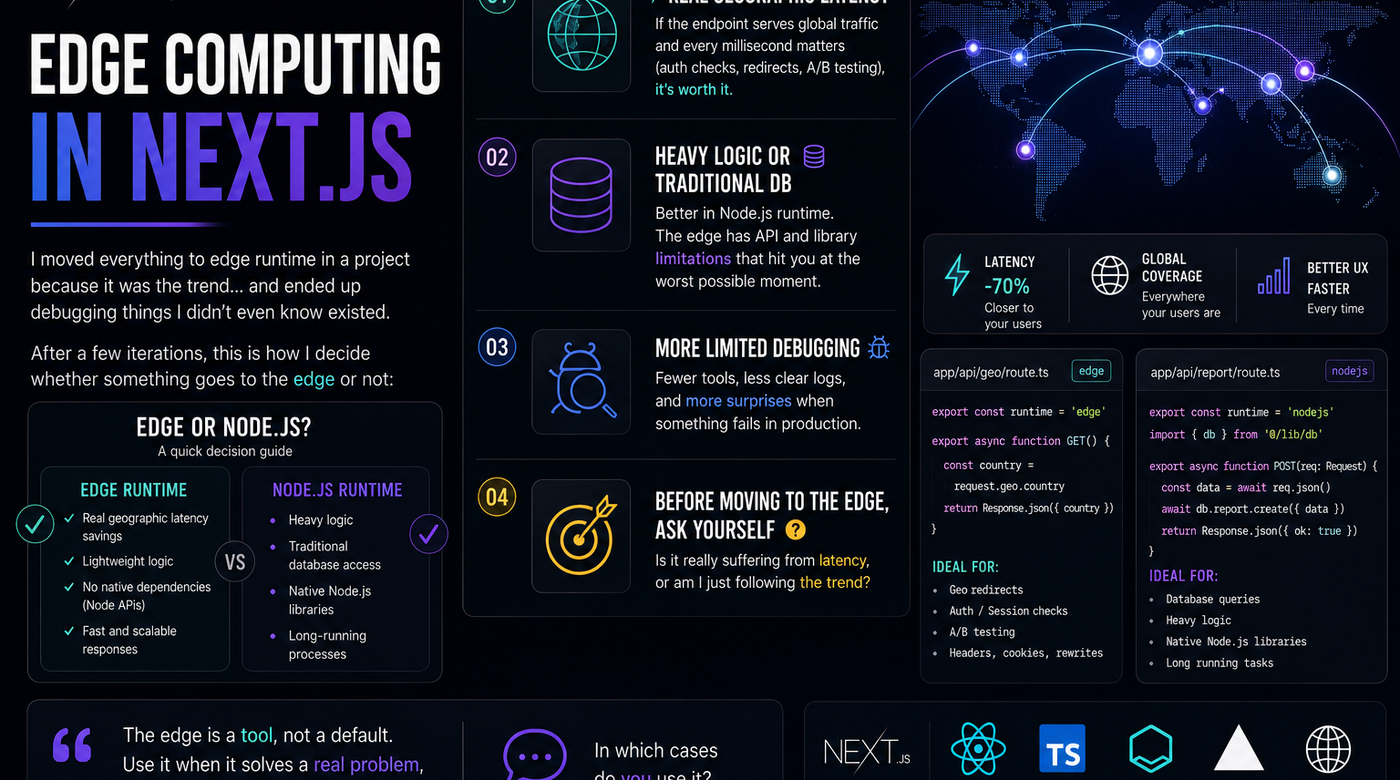
I once moved everything to the edge runtime on a project just because it was trendy — and ended up debugging issues I didn't even know existed.
Here's how I decide now whether something belongs on the edge:
⚡ Real geographic latency — if the endpoint serves global traffic and every millisecond matters (auth checks, redirects, A/B testing), it's worth it.
🔧 Heavy logic or traditional databases — better suited to the Node.js runtime. The edge runtime limits which APIs and libraries you can use, and you feel it at the worst possible time.
🐛 Limited debugging — fewer tools, less clear logging, more surprises when something breaks in production.
🎯 Before moving anything to the edge, I ask myself: does this actually suffer from latency, or am I just following the trend?
Edge computing is a tool, not a default. Use it when it solves a real problem — not because it sounds modern.